
Designing for Growth: The Importance of Professional Interior Design in Daycare
When it comes to shaping early childhood experiences, the environment is just as influential as the curriculum, especially when it comes to daycare interior design. A daycare is often a child’s first classroom and a vital social setting, making its daycare interior design a key component in childcare success.
As interior designers, we understand that every design decision in childcare interior design (whether its colour, layout, or lighting) affects mood, behaviour, and development as well as contributes to broader commercial interior design solutions. When parents walk into a daycare centre, they are not only seeking childcare; they are looking for a space that feels safe, trustworthy, and nurturing. Ultimately an environment where their child can thrive. Thoughtful design plays a powerful role in creating that confidence. This is why investing in professional interior design for daycare spaces is essential.
From the psychology of colour to a carefully planned spatial plan, a professionally designed daycare enhances learning, safety, and your business’s reputation. Investing in holistic interior design for your daycare or early learning facility is more than an aesthetic choice; it is an investment in the well being and growth of every child that comes through those doors.
Why You Should Hire an Interior Designer
Before beginning a daycare construction project, it is essential to thoroughly research and understand what the process involves, especially when planning daycare design services. Establishing a realistic and well-informed budget from the start is one of the key factors in the success of the project. A well-planned daycare design in Toronto must also account for local construction costs and regulations. Constructing a project of this nature is a complex process that requires collaboration among many professionals, all working towards a shared goal, your project. Having experienced consultants as a part of your team is invaluable. Interior designers serve as a vital bridge between the architect, general contractor, and engineers. Specifying the detailed elements that architects often leave open ended and providing essential documentation like schedules and drawing sets to support construction and coordination.
In Canada, construction costs for daycare centres will typically range from $150-$450 per square foot, largely dependent on location. In Toronto, it is wise to plan for the higher end of that range, and include a contingency plan of 15% to account for unexpected expenses. Site preparation, infrastructure work, project scale, and navigating regulations and permits will all have an impact on the final costs, so it is important to ensure these factors are considered when developing the budget for the project.
Once the budget has been established, attention turns to the spatial layout, design features, and material, fixtures, and furnishing selection. These design decisions are as crucial as the structural elements, as they influence both the functionality and the overall environment of the daycare.
Supporting Development Through Spatial Design
Children experience the world through their surroundings and movement, and daycares must accommodate a range of developmental stages under one roof. Interior design requirements mandate maximum group sizes, staff to child ratios, and play activity space that is dependent on the age group. Effective childcare space planning ensures that each area supports movement, learning, and independence. This approach is commonly applied across commercial interior design projects.
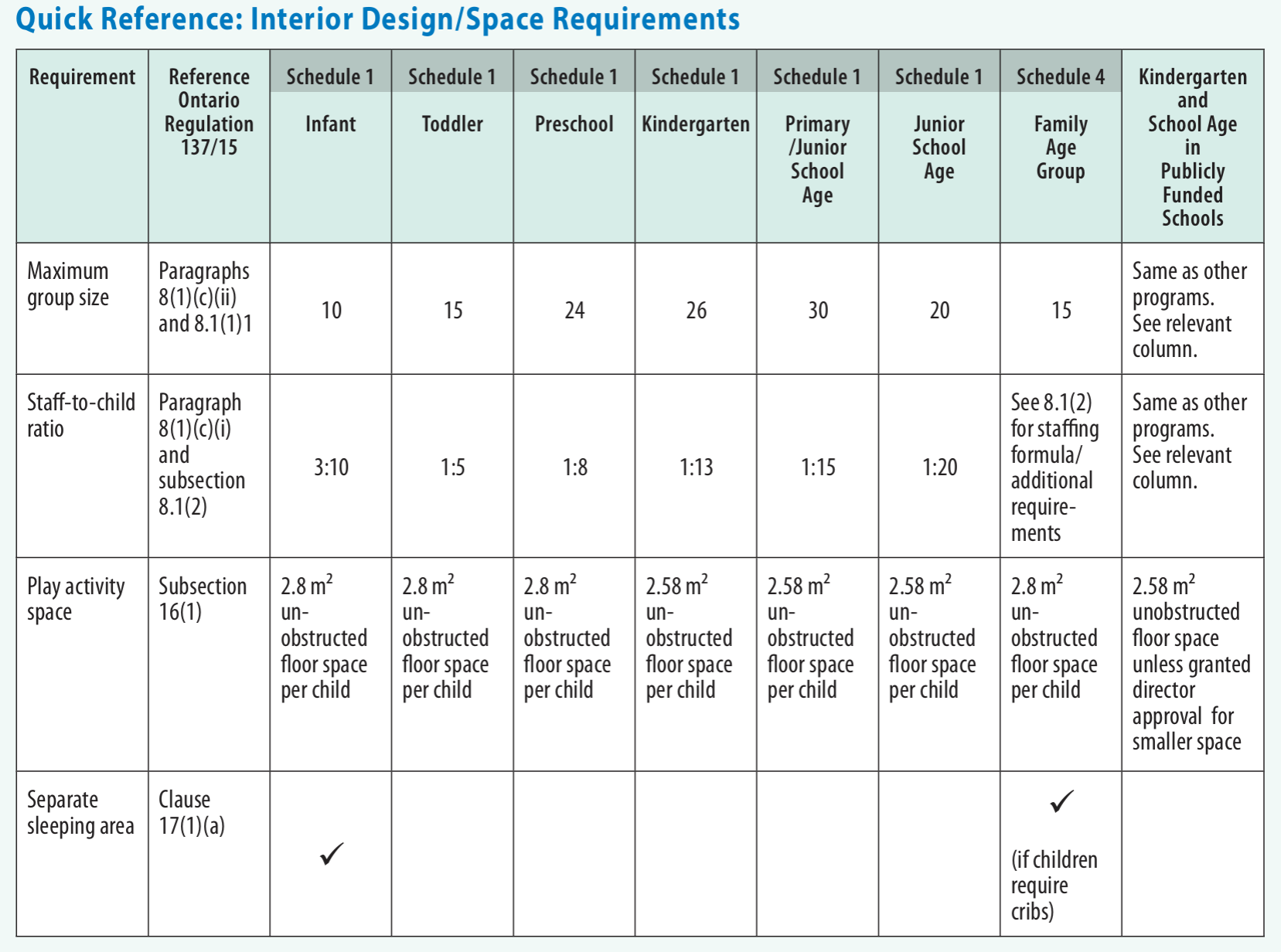
When devising our schematic layouts, we must follow these regulations, while ensuring our layouts maximize the potential for movement, exploration, growth, and independence. A well designed layout encourages curiosity and play, while maintaining order and safety.
Infants, toddlers, and preschoolers all have unique needs for their development, as each age group engages with the space in very different ways. It is our responsibility as designers to scale and adapt each zone to ensure these needs are met. The way to do this is to create distinct zoning within each room that becomes the foundation for how children will move, interact, and develop within their environment.
Active Zones
Open and unobstructed floor space that encourages motor activities like walking, running, dancing, etc. to help build coordination, strength, and confidence
Consider resilient and durable flooring that provides a soft and tactile surfaces with for infants learning to walk
Creative Zones
Smaller, flexible areas with accessible tables, sensory materials to encourage fine motor skills and imaginative and social play
Employ adaptable furniture like low Montessori bookcases or wooden play structures that can be used for storage as well as subtle partitions to define the zone
Quiet Rest Zones
Soft, comfortable areas that allow children to recharge physically and emotionally
Introduce child size furniture like modular play sofas to encourage independent reading that can be easily moved for nap time
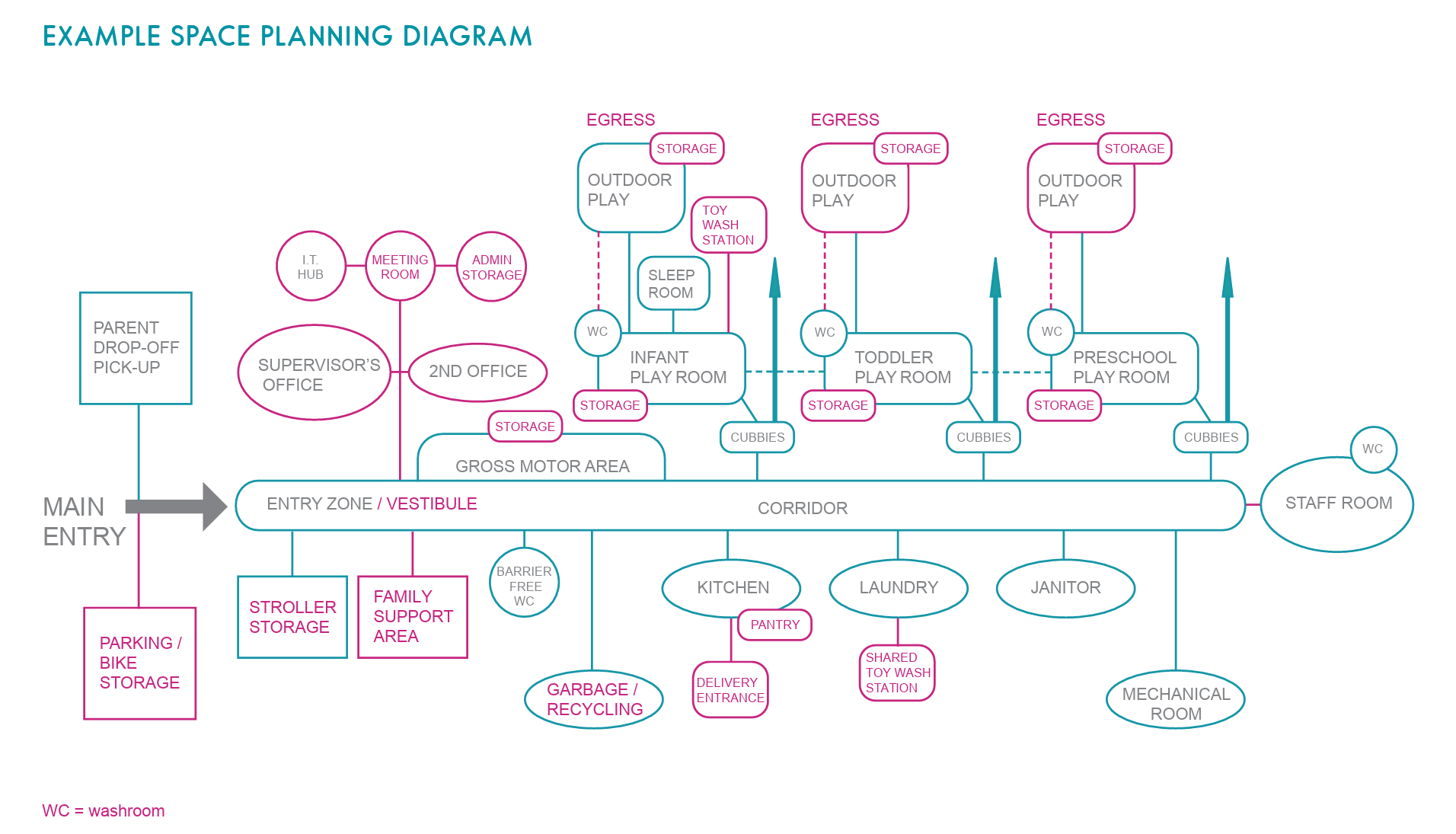
The progression in spatial planning should reflect the child’s growing sense of independence and allows the environment and space itself to evolve along with them. Ensuring these zones are well defined is important, but almost more important is how they transition into one another. Smooth transitions reduce friction and confusion, as well as overstimulation. Consider implementing subtle flooring changes to signal a shift between an active zone to a quiet one, or use casegoods to define a boundary. Colour cues can also help a child intuitively understand where they are. These subtle environmental cues empower children to self-regulate and develop independently, an early learning skill.
Strategic placement of these zones also allow staff and educators to monitor multiple activity types at once, from one vantage point, ultimately reducing fatigue and improving supervision. A well-zoned daycare supports structure and routine, minimizing the chaoticness that can be associated with transition times.
Designing for Safety Without Sacrificing Aesthetics
When it comes to safe daycare design, safety is a non-negotiable. Every corner, surface, fixture, and material choice has a role in that safety. But sometimes, safety becomes synonymous with institutional and uninspired. At Sansa Interiors, we go beyond that, and see the opportunity to create a beautiful space that is both stimulating and safe. This is where child-friendly interior design plays a crucial role. The key is understanding how holistic design can craft this environment.
Designing for safety is where form meets function; about how safety can be seamlessly integrated without looking so utilitarian. Rounded corners, low shelving, soft flooring, and durable finishes are tried and true, and provide the best opportunity to introduce natural tones and textile materials that are resilient and sensory rich.
Safety in design is about preventing harm, but also about empowering independence. Low sinks and counter surfaces, child height cubbies and bookcases, and furniture scaled to child size give children autonomy within safe limits, and builds confidence that supports development while maintaining order. Going beyond the baseline compliance requirements and integrating thoughtful design allows for your brand to stand out, as parents make decisions based on how a space makes them feel. For example: soft corners are integrated through millwork rather than corner guards or bumpers, or safety gates that become a part of the architectural elements instead of surface mounted. Seeing organized, well designed and welcoming spaces are instantly associated with quality care.
Consider Adjoining Cafes or Coworking Spaces
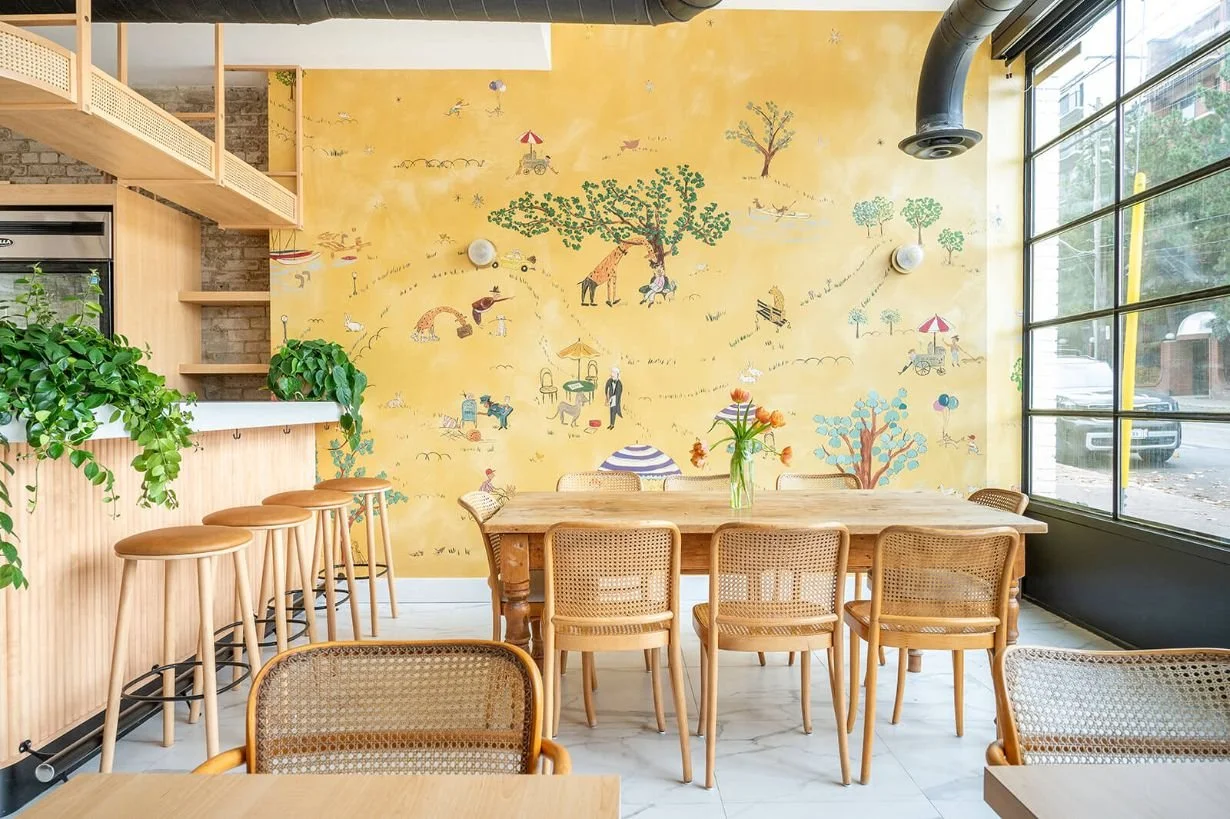
Presently, the boundary between work, family, and social life have blurred. More and more parents are not just seeking daycare; but community-focused childcare design that supports modern lifestyles. As designers, we have a rare opportunity to respond to this shift and reimagine what the daycare environment looks like as a social anchor on top of childcare. How to do this? Integrate a coffee shop or coworking space. This has led to the rise of daycare with cafe concept and daycare with coworking space models.
Parents today juggle the demand of work schedules, hybrid jobs, and the never ending mental load of parenting. Traditional day care models of drop off, head to the office, work a typical “9-5”, and rush to pick up are stressful and chaotic. A cafe or coworking area within or in proximity of the daycare flips that experience entirely.
It offers a soft landing zone for parents as a place to pause after drop off, catch up on emails before a meeting, or spark a conversation. This model transforms a purely functional space into a community hub and is more supportive of a modern lifestyle, and nurtures the entire family ecosystem.
From an operator’s perspective, this hybrid model reflects a growing trend in commercial hospitality design projects. A cafe or coworking space generates a secondary stream of revenue, and attracts new families who value convenience and community. For designers, the project becomes dynamic, as we are now accommodating commercial hospitality, workplace strategy, and early childhood design all in one.
Designing a daycare is about so much more than meeting regulations or creating a cheerful space. It is about shaping the daily experiences that influence how children learn, connect, and grow. When interior design is approached with expertise and intention, it transforms a facility into a nurturing environment that supports both development and community. At Sansa Interiors we believe thoughtful daycare interior design in Toronto is the foundation for meaningful growth, for children, families, and business alike. Whether you’re planning a new daycare or reimagining an existing one, investing in professional interior design is an investment in the future
Make it stand out
Whatever it is, the way you tell your story online can make all the difference.
Designing Spaces That Shape Bright Futures
A well-designed daycare is more than a space; it’s an environment that supports learning, comfort, and growth. At Sansa Interiors, we create childcare spaces that balance safety, functionality, and inspiration for both children and educators. Let’s build a space that nurtures imagination and leaves a lasting impact. Working with daycare design experts ensures your space is both functional and future-ready.