
Adaptive Hospitality Design: How to Design for Flexibility and the Future
As lifestyles evolve and technology becomes more and more integrated into our daily routine, the spaces where we live and work must evolve too. In today’s ever-changing business landscape, hospitality spaces can no longer afford to be static, especially when planning restaurant interior design in Toronto. Whether it be a café, high end dining, or a quick service restaurant, the environments we curate must be agile and ready to adapt to shifts in customer expectations and operational pattern change.
What is Adaptive Design?
Adaptive design is more than a trend in interior design; it is a forward thinking philosophy that emphasizes the need for flexibility, versatility, and resilience. At its core, it is a strategic approach that empowers spaces to evolve in response to immediate needs while remaining prepared for future demands. Rather than designing environments to have a singular purpose, adaptive design emphasizes multifunctionality, enabling spaces to transition smoothly between different uses, layouts, and operational modes.
In an industry that is as proficient in change as hospitality is, this design mindset is especially valuable. Whether it is adapting to new dining behaviours, a shift in your staffing model, evolving health and safety protocols, or scaling for the growth of your business, adaptive interiors provide the framework for a seamless transition. It allows you to be dynamic by nature, pivot quickly, and respond proactively to market demands, with minimal disruption and maximum impact.
Why Adaptive Design Matters
Changing Customer Habits
In the hospitality sector, where profit margins are thin, adaptability is key. A well designed, flexible space can have a direct and measurable impact on the bottom line. As customer habits continue to shift, especially post pandemic, diners expect a variety of options for how they experience food. From indoor and outdoor dining, to solo seating and group gatherings, grab and go service, and remote ordering with in person pickup, the demand for choice and convenience is greater than it has ever been. A static layout limits a restaurant’s ability to accommodate these diverse needs, while an adaptive environment ensures the space can shift to meet customer expectations without sacrificing efficiency or atmosphere.
Sustainability and Longevity
Sustainability in interior design is about curating spaces that endure functionally, aesthetically, and environmentally. Adaptive design plays a key role in this by allowing spaces to evolve over time in a way that is efficient, cost effective, and responsible. Frequent redesigns not only disrupt operations and revenue, they generate significant waste. Today’s consumers are increasingly eco-conscious, meaning sustainability becomes an expectation of the brand and not just a design consideration. While adaptive solutions may require a higher investment up front, designing with reuse and longevity in mind reduces the need for constant updating. Choosing quality over quantity ensures that furniture, fixtures, and finishes withstand trends and time, reducing the environmental impact while setting a high standard of design.
Operational Efficiency
We all know how volatile the restaurant industry is. However, operational unpredictability in recent years seems to have become the new standard. Staffing shortages and supply chain disruption mean businesses are expected to do more with less. In this landscape, adaptable design is a strategic advantage. By creating interiors that are flexible, restaurateurs gain the agility to adjust workflows, reconfigure spaces, and respond to changing conditions without the need for costly or time consuming changes. Adaptable design helps ensure continuity, efficiency, and resilience in an industry where stability can be out of reach.
Key Principles for an Adaptive Restaurant Interior Design Mentality
Recent years have accelerated the need for agility, so rather than resisting change, adaptive design embraces it. When planning for the future, we want to ensure that we are meeting the needs and requirements of our clients so that they can optimize every square foot and future-proof their business for whatever comes next. A Sansa-designed restaurant or cafe will always drive performance and growth!
When planning spaces with the future in mind, we need to plan for a space that will serve multiple purposes. To achieve this, here are a few key principles to consider:
Purposeful Zoning: Defining spaces tailored to various needs of your patrons will maximize the usability of your space and appeal to a broader range of clientele. For example, a private dining room that can transition for a special event, high top counters for takeaway, or quiet corners for solo guests
Modular Furniture: Integrating modular furniture that is functional and reconfigurable allows for your space to accommodate various customer habits and party sizes
Materiality: Surface and materials are selected for aesthetics, but also for their durability and cleanability. Finishes must withstand heavy traffic, spills, and constant cleaning
Technology: Seamlessly integrating technology will aid in streamlining the overall ordering process and simultaneously enhance the ambiance of space. Think of discreet speakers to control sound, or thoughtfully placed power outlets
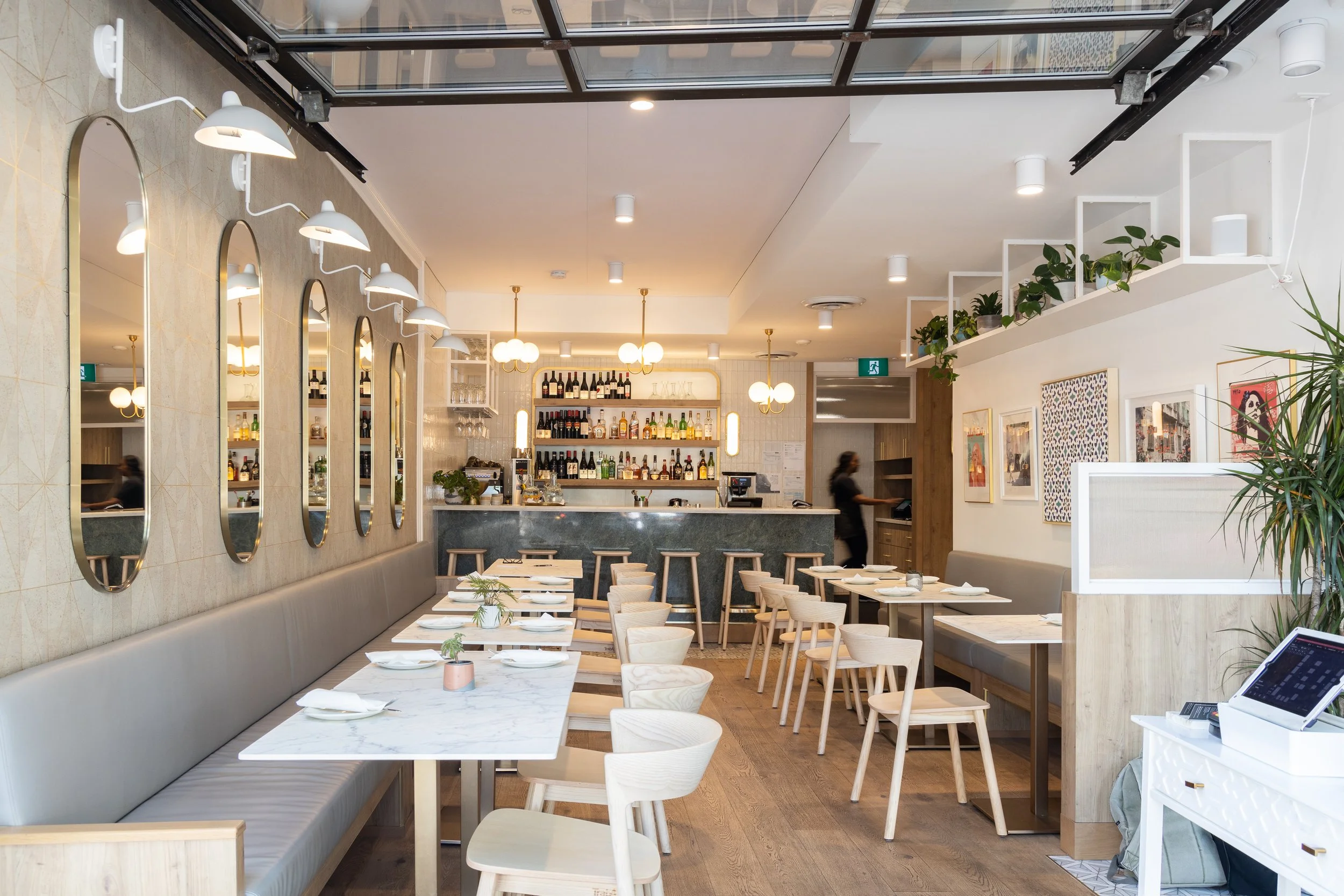
In a fast paced and ever changing industry, adaptability is no longer a luxury. Hospitality spaces must do more than just look good; they must work hard, shift seamlessly, and support both the demands of the customer as well as the operation. Adaptive design provides a powerful framework for creating interiors that are beautiful, smart, sustainable, and future proof. By embracing flexibility through purposeful zoning, modular elements, durable materials, and thoughtful technology integration, restaurants and cafes can remain relevant, resilient, and ready for whatever comes their way. At Sansa, we design with this mindset at our core, and curate spaces that grow with your business to elevate every experience.
Create an adaptive restaurant through interior design
Sansa Interiors is Toronto’s premier holistic interior design studio. Let’s craft your dream restaurant together!