
Materiality Matters: A Holistic Approach to Commercial Interior Design
Material selection is one of the most critical decisions in the design process, forming the foundation for both the aesthetic vision and the functional integrity of a space. In commercial design especially, where branding, performance, and user experience intersect, material selection is always strategic. Said materials provide more than just visual appeal; they portray an identity, guide behaviour, and influence how consumers interact with the space. Materiality is not simply a design element, it is a narrative tool, and a core expression of the intention of the design.
Materiality plays a vital role in shaping the sensory experience of a space, especially in commercial environments where customer interaction is paramount. It has the unique ability to engage and captivate users on a multi sensory level, through sight, touch, and even smell, inviting them to linger and explore, ultimately forming a connection to that environment. Materials have the power to ground people in a space and turn a fleeting visit into a lasting impression. As a result, their selection is never arbitrary; it is a deliberate and layered process that balances form, function, and feeling. This is particularly important when working with eco-friendly materials.
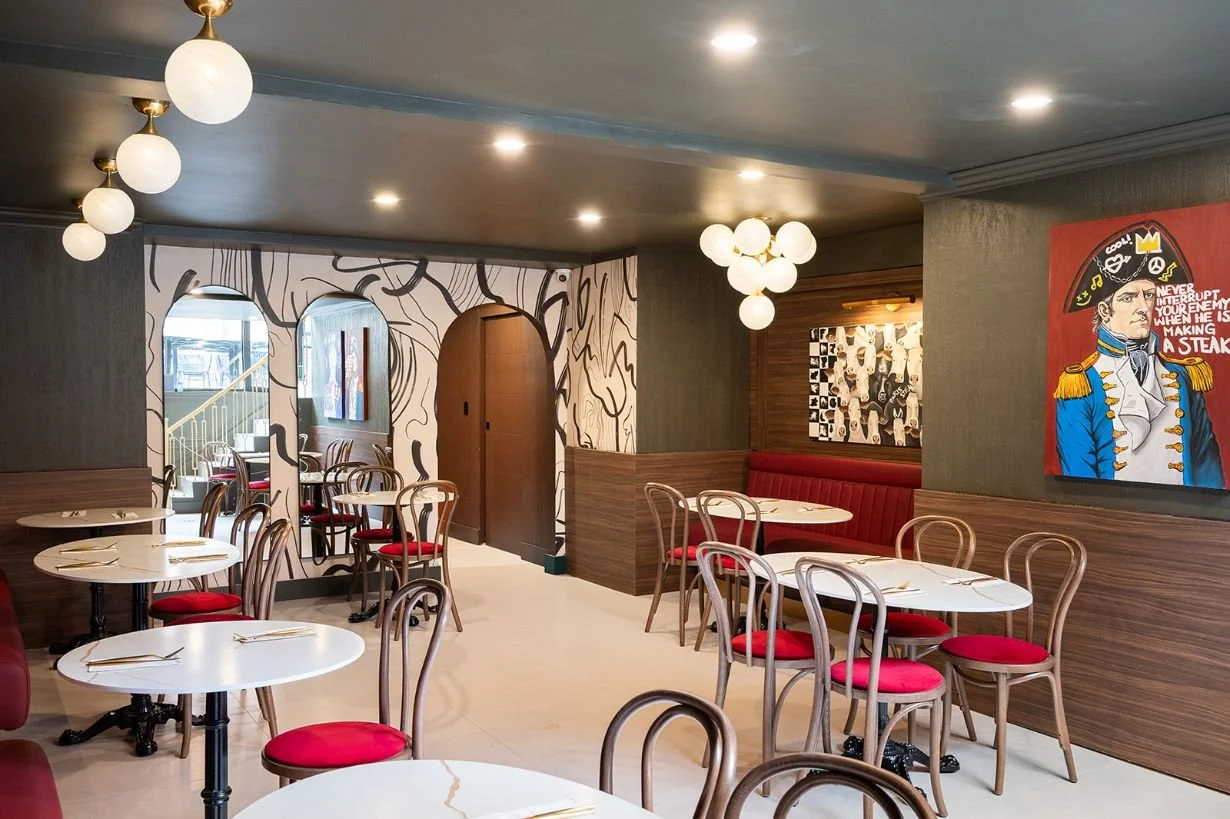
Today, our material choices are influenced by dynamic factors that extend past pure aesthetics. We as designers are constantly navigating an ever changing landscape where sustainability, technological advancements, and performance standards intersect with brand values and user expectations. The mould is shifting in response to cultural trends, environmental responsibility, and advances in material science. Customers are design literate and more informed than ever before. This shift is driving demand for sustainable commercial design practices. They recognize authenticity and value transparency, and can recognize when a material is chosen for meaning as well as effect. This is why Sansa Interiors always strives to prioritize eco-friendly and ethically sourced interior products without compromising aesthetics.
Material choices in commercial interiors come down to four things: sustainability credentials, durability under constant use, safety and code compliance, and how textures work together to create character.
How Does Sustainability Shape Material Selection?
In today’s evolving climate and design landscape, sustainable interior design is so much more than a buzzword. Environmental responsibility is becoming an essential component of good design, especially in the commercial and hospitality sectors where scale and impact are significant. Manufacturers are prioritizing the use of renewable and recycled materials, and introducing products with higher recycled contact to minimize their carbon footprint. These decisions are both ethical and strategic, aligning with growing consumer expectations and corporate goals. One of the most effective and accessible ways in sustainable design is material specification. Plant based materials like bamboo, cork, hemp, and sustainably harvested wood are becoming increasingly common due to their renewability, durability, and low environmental impact. These strategies support a low-carbon footprint design approach in commercial spaces.
What Constitutes a Sustainable Material?
Renewable: Resources that regenerate quickly and can be harvested without depleting ecosystems.
Recyclable: Products that can be repurposed and support a circular design approach at the end of its lifecycle, is biodegradable, and contributes to a circular economy
Energy Efficient: Materials that offer insulation and thermal properties that reduce energy consumption, leading to cost and carbon savings
Locally Sourced: Reduces the carbon emissions associated with shipping and logistics
Non-Toxic: Materials and products that are free from harmful chemicals and volatile organic compounds (VOCs)
Life Span: Materials that are built to last and reduces the need to be replaced frequently
When commercial spaces showcase thoughtful design via material choices, it highlights sustainability as a core value, showcasing integrity and intention to clients, customers, and users. These choices directly influence design and construction, and encourages transparency and accountability in the supply chain, which in turn shifts industry standards and drives innovation toward more sustainable practices. As designers, it is important for us to align ourselves with suppliers and manufacturers who believe in these practices and highlight them as a major part of their business model.
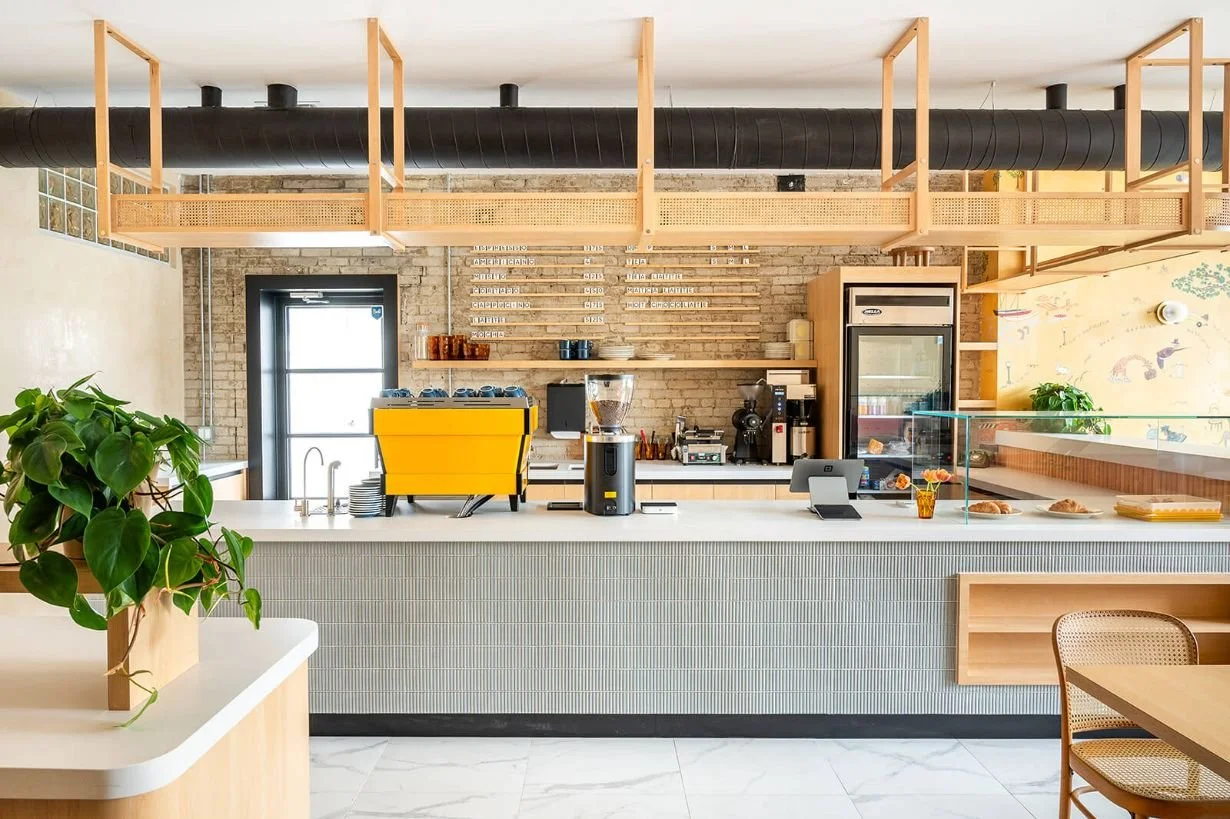
Reusing existing elements is a core strategy in sustainable interior design, materials, and furnishings is a sustainable strategy that is commonly overlooked. This approach reduces waste and supports low-carbon footprint design. Rather than starting from scratch, this approach embraces the value of what already exists in the space (like the reclaimed brick and calacatta floors in our Paper Route project!. By incorporating these elements into the new design, we significantly reduce waste and conserve resources. Beyond the environmental benefits, reuse adds warmth, character, and a sense of history to a space; qualities that are difficult to replicate with items that are mass produced. Sourcing vintage/restored pieces like furniture and lighting sparks conversation, provides a focal point, and tells stories that connect the past and present. It is also a budget friendly option that often supports local artists and businesses, further contributing to the sustainability and community-centred design approach.
As sustainability becomes a defining principle of modern design, often using recycled or bio-based materials aligned with net-zero interior design goals, technological advancements are helping to further reimagine what it means to build responsibly. Tools like 3D software are streamlining processes and are enabling us as designers to make resource-efficient models from the start. Virtual prototyping allows us to explore material combinations, finishes, and layouts before a single item is produced, reducing the need for excessive sampling. Precision planning tools ensure accurate measurements and material calculations, minimizing overordering. Suppliers are creating evermore accurate digital libraries, ensuring we have access to readily available product specifications and technical data, reducing the dependence on physical samples which further contributes to waste reduction.
The emergence of 3D printing in the manufacturing world has quickly gained traction in the manufacturing world. What was once experimental technology is now being utilized as an innovative and viable tool for creating custom furniture and fixtures, often using recycled or bio-based materials. 3D printing can happen locally and on-demand, therefore significantly reducing carbon emissions related with overseas manufacturing and long distance shipping.
Ultimately, sustainability in design goes beyond selecting eco-friendly materials. It involves designing systems and processes that are efficient, adaptive, and intentional. Sustainable materials are redefining the language of our world, in both how we think and how we build. It challenges us to rethink surface-level aesthetics and embrace a deeper responsibility of creating spaces that are beautiful and functional, but also regenerative and future facing.
What Makes a Material Suitable for Commercial Use?
Commercial materials must handle constant foot traffic and repeated contact while staying easy to maintain and meeting fire safety regulations. Durability comes first, since replacement creates both cost and waste.
When selecting finishes for a commercial space, we have a steadfast checklist that the materials we specify must meet. Durability is our first consideration. Unlike residential, commercial spaces experience constant foot traffic and repeated surface contact. Therefore, not only do the materials that we specify need to be visually pleasing, they need to be long lasting, reducing waste and supporting sustainable commercial design.Whether it’s flooring, wall cladding, millwork, surfaces, or textiles, every finish must be able to withstand continuous wear and tear with minimal upkeep while maintaining its aesthetic integrity over time.
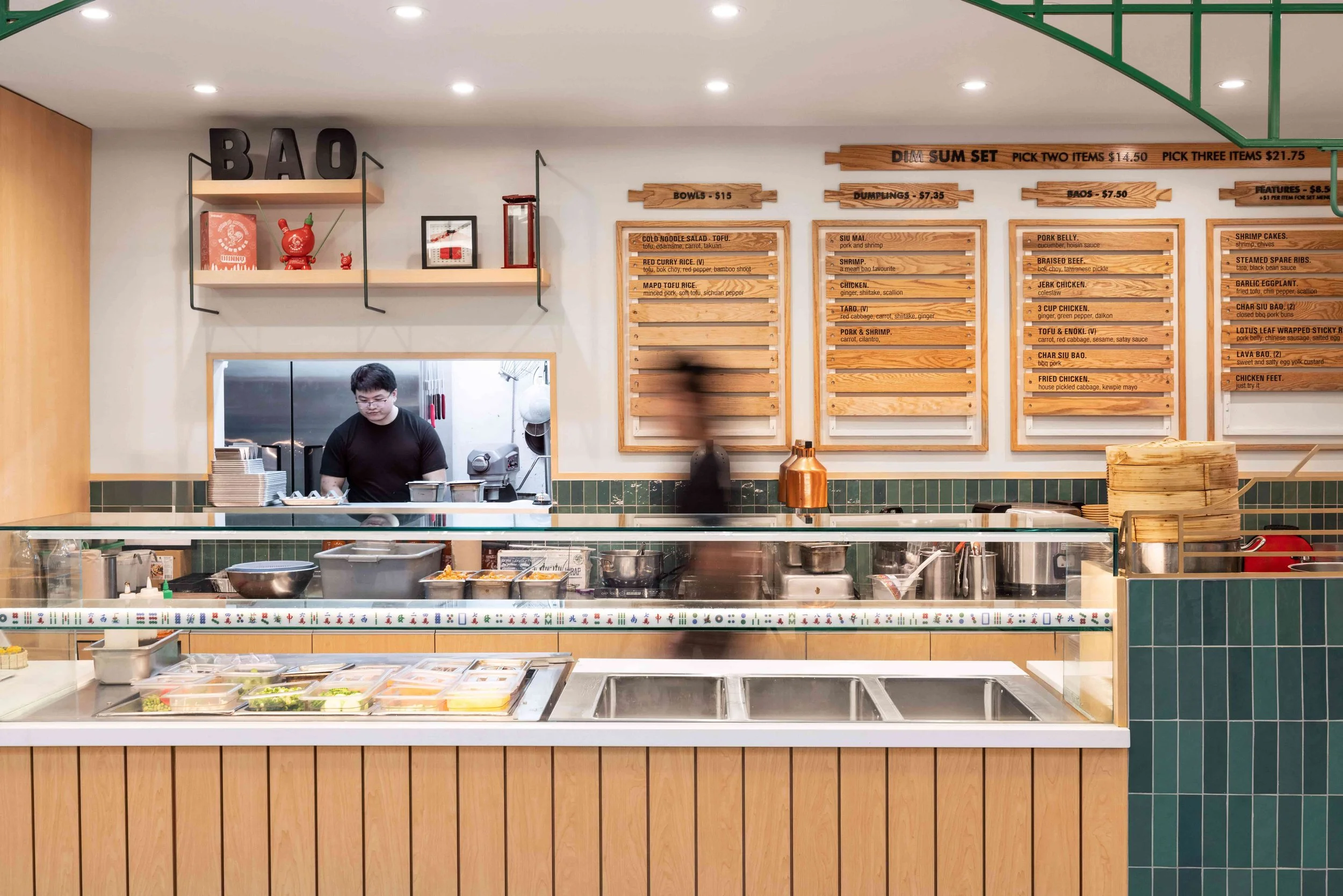
High performance materials that are resistant to stains, scratches, and impact are essential to both function and appearance. For example, if you are installing tile flooring, consider a through-bodied porcelain. In the unlikeliness of a chip or crack, the colour runs through the entirety of the tile, therefore if damage occurs, it's less visible. This is in comparison to glazed tile which typically houses a white core. Similarly, when specifying a wood product for flooring or millwork, selecting a hardwood over a softwood can make a significant difference. Dense species such as oak, maple, or walnut offer better resistance to dents and surface damage. Better yet, select a wood-look vinyl or high pressure laminate that provides the benefits of wood (warmth, colour, graining, etc.) but has the longevity and durability of a plastic product.
Beyond physical durability, practicality of maintenance is a defining factor in material selection. Surfaces should be easy to clean, non-porous, and able to withstand frequent cleaning and sanitation without deteriorating. Wall panels, countertops, and upholstery must be able to handle regular daily cleaning with fading, staining, or breaking down.
Safety is another fundamental consideration. In any public or commercial space, materials must comply with Canada’s fire safety regulations. This includes selecting finishes that have appropriate fire rated classifications, and do not emit toxic chemicals or VOCs if exposed to high heat or flame. Wood finishes can be treated with fire-retardant coatings, while textiles and upholstered products should meet or exceed required flame spread ratings. Many commercial grade fabrics come with backings that are fire-resistant, or they are treated with performance coatings meant to slow the spread of fire.
Additionally, vertical surfaces and wall claddings in high traffic zones like corridors, lobbies, and elevator cabs, must be carefully considered as well. These areas are prone to scuffing, bumping, and close contact. Type II vinyl wallcoverings, porcelain panels, or high pressure laminates are beautiful yet functional wall treatments that hold up to the rigour of their location, and offer both resilience and versatility in their design.
How Do You Create Textural Contrast in a Space?
Textural contrast comes from layering opposites: matte against gloss, rough against smooth, organic against structural. Wood and metal is the classic pairing, and mixing metal tones or pattern scales adds further depth.
Now for the fun part: Bringing all of this design knowledge to life in a real project!
A successful interior design project (in our opinion) goes beyond choosing beautiful pieces; it’s about creating a rich, thoughtful space that feels thoroughly curated. An effective way to achieve this is through textural diversity. Layering a variety of finishes and materials creates depth and interest. For example, contrast the simplicity of smooth, high gloss tiles with patterned and tactile upholstery or an intricate light fixture. This interconnection of matte and shiny, rough and smooth, or bold and subtle, is what gives the space complexity and character.
Many of these material strategies are applied across our restaurant and hospitality projects.
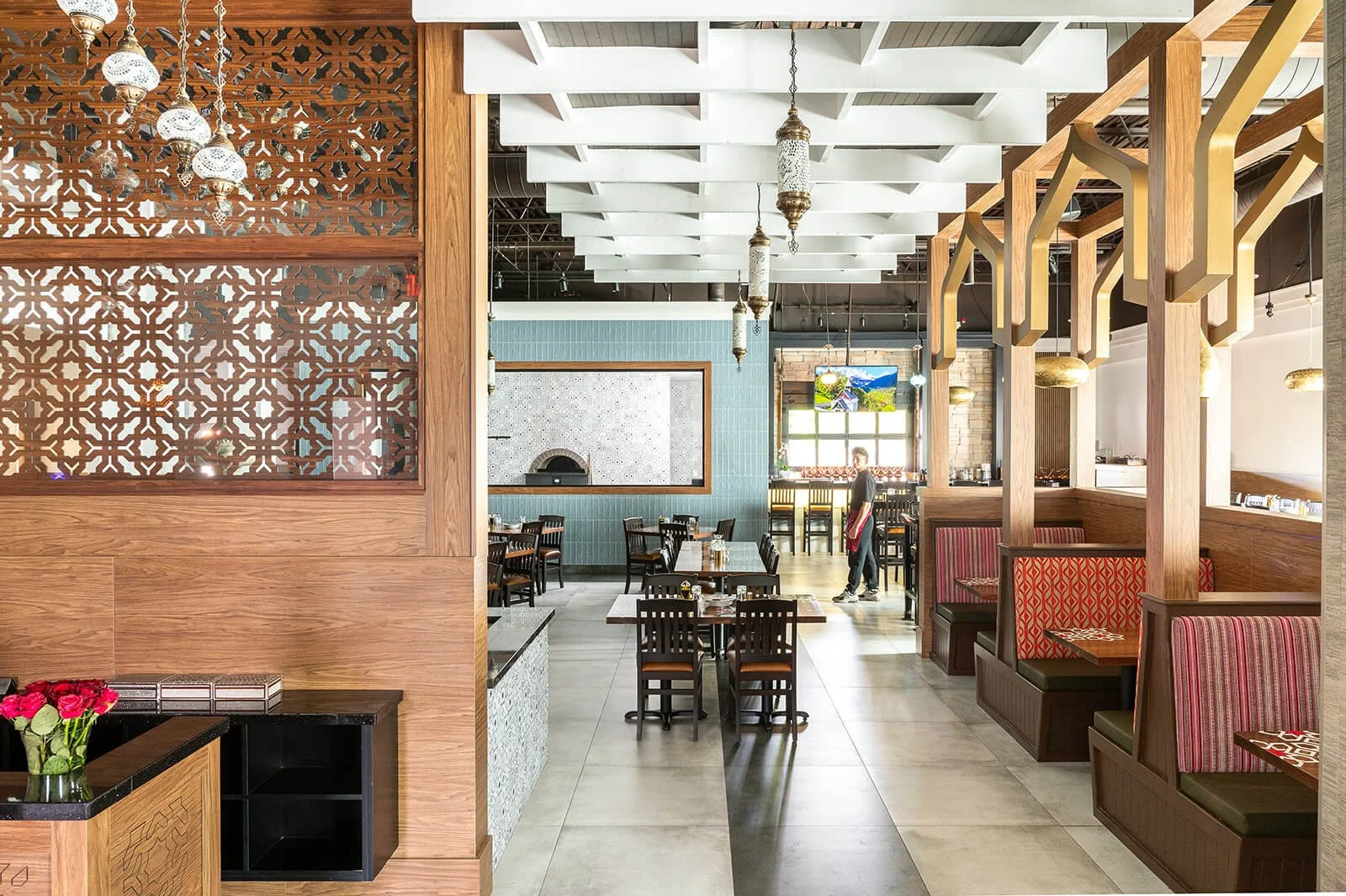
Consider how natural materials can be inputted into the design narrative. Wood and wood-look finishes introduce warmth that grounds the room with their organic, earthen quality. These elements can be paired with bold patterns and vibrant colours to create a bright, playful atmosphere, or with soft creams and muted neutrals for a more serene, elegant palette.
A classic pairing of textural contrast is wood and metal. This combination is a strategic way of balancing warmth and structure to create a space that feels grounded and contemporary, while being versatile and timeless. The organic texture of the wood softens the sharpness of the metal, while the metal adds an edge of architecture and clarity.
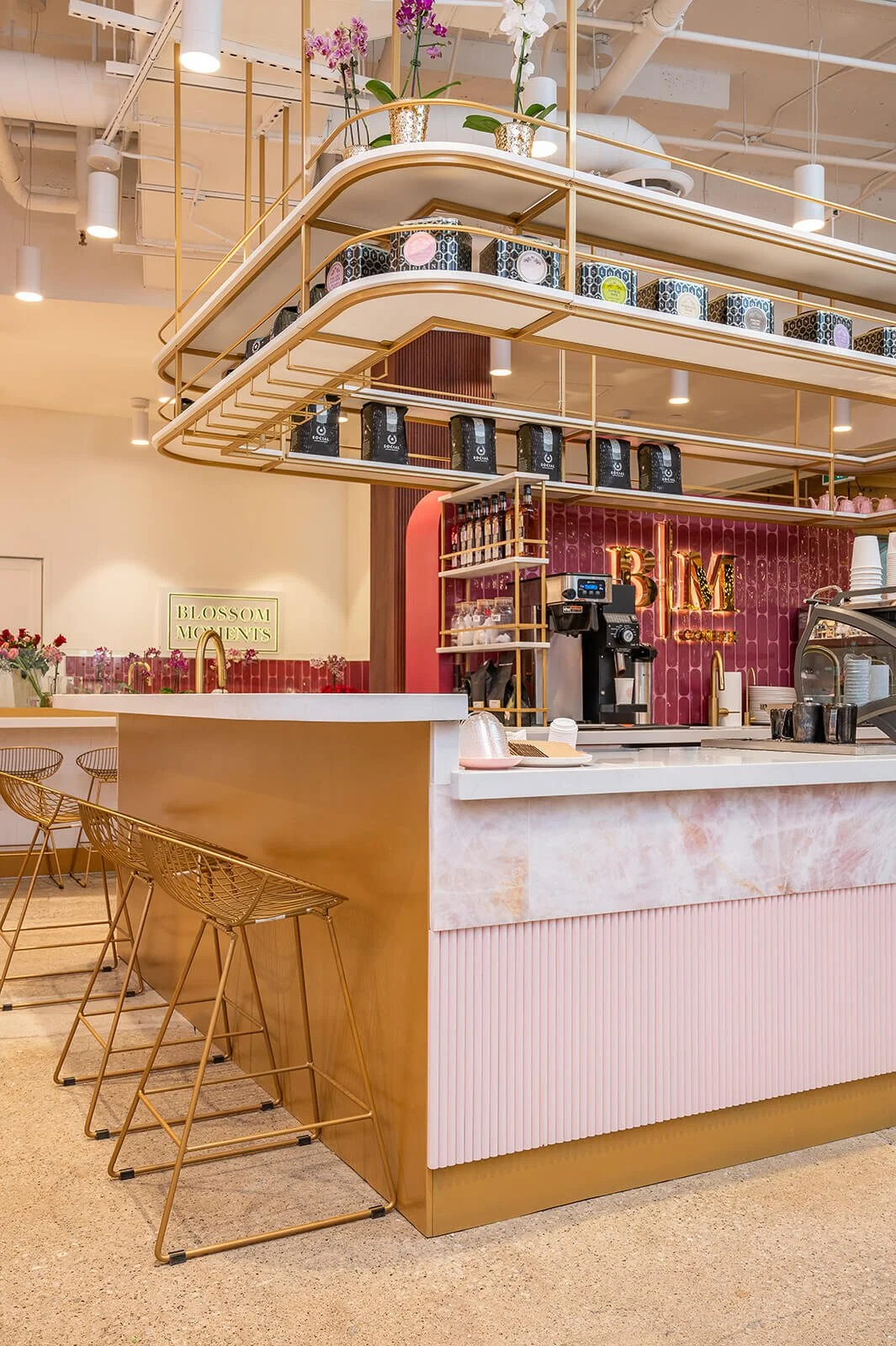
Mixing metals is an intention design strategy that adds depth, contrast, and dimension to a space. The key is to select a dominant metal tone to ground the palette, then layer a secondary tone to create visual interest and complexity. For example, the warmth of a brushed gold or brass pairs exceptionally well with the industrial coolness of a matte black, balancing elegance and boldness. Metals not only introduce contrast; they reinforce cohesion when used in repetition. That striking gold chandelier that is the focal point of the room is subtly echoed by the gold hardware of the millwork, which creates continuity, making the space feel elevated and purposeful.
Scale is a powerful and engaging tool. Don’t be afraid to mix patterns, but be mindful of their scale. Mix large format tiles with smaller mosaics, or pair oversized patterns with tight, intricate prints. This juxtaposition enhances the rhythm of a space, and keeps the eye engaged.
Biophilic elements, especially greenery, plays a significant role in bringing life to the design. While real plants offer that “living” element, faux greenery offers a low maintenance alternative, especially with how incredibly realistic they have become. With no watering required or specific lighting conditions needed, faux plants provide the sense of vitality and movement that real ones do, without the maintenance.
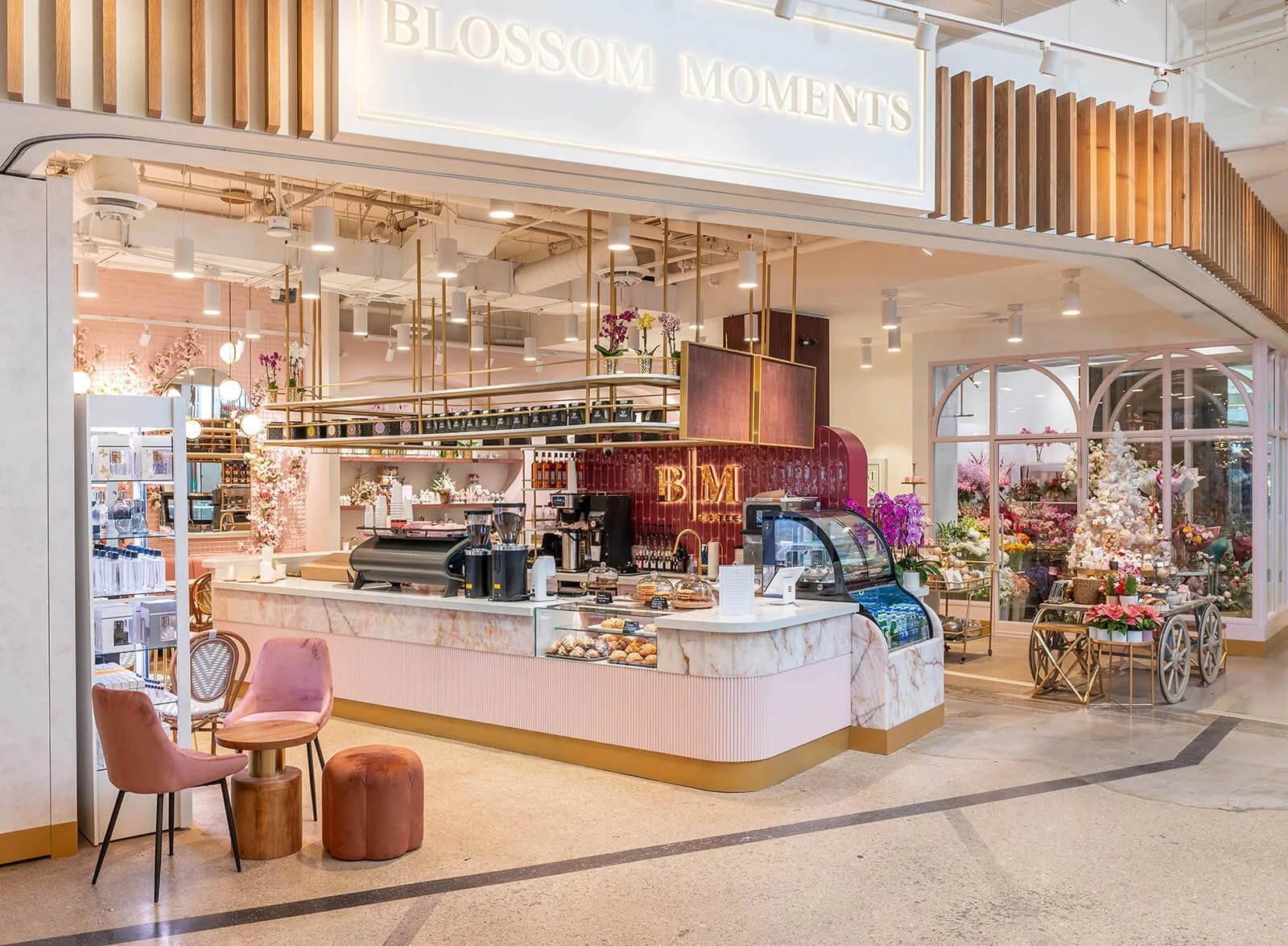
In the end, design is about intention, especially in environmentally responsible design, and the material choices that highlight those intentions. Of course it’s about making something look good, but it’s deeper than that. It’s about purposefully crafting texture and scale and colour, and layering materials, light, and form to create spaces that are both visually compelling and emotionally resonate. As designers, we are tasked with selecting and orchestrating materials that support the identity and functionality of a space. It is our job to translate ideas on paper into tangible environments, which is a result of deliberate and educated selection that is grounded in a clear vision and guided by experience.
Build your space with the right materials through interior design
Sansa Interiors is Toronto’s premier holistic interior design studio. Let’s craft your dream restaurant together!