

There's a version of this story that ends with a finished space, an opening date on the calendar, and a line out the door.
There's another version where the line-up never happens because the occupancy permit got held up for six weeks and the landlord is sending emails in all caps.
The difference between those two stories is almost always the same thing: knowing what permits you need, in what order, and what each one actually means for your buildout. So let's get into it.
First: Understand the Two Tracks
Opening a café or restaurant in Toronto runs on two parallel tracks — your business licences and your building permits. Both are non-negotiable. Both take time. And neither one waits for the other to finish first, which is why you want a designer and a project team that understand how they interact from day one.
The Business Licences You'll Need
1. Eating or Drinking Establishment Licence
This is the City of Toronto licence that covers any space serving food or drink to the public. Before you can apply, you'll need an approved Zoning Review for Business Licence — the City has to confirm your space is actually zoned for a restaurant or café use. This is step one, and it's the one people skip at their peril.
2. Food Handler Certification
At least one person on your team must hold a valid Food Handler Certificate from Toronto Public Health. This one is straightforward — it's a course and an exam. Budget a few weeks for scheduling.
3. Liquor Licence (if applicable)
If you're serving alcohol, you need an AGCO (Alcohol and Gaming Commission of Ontario) licence. This process can run 90–120 days, so start it early. Your designer will also need to know this upfront because liquor-licensed spaces have specific layout requirements around service zones and sightlines.
4. Patio Licence (if applicable)
Want an outdoor patio? You'll need a separate licence from the City, and your patio layout will need to meet municipal requirements around pedestrian clearance on sidewalks. This is especially relevant on Toronto's busier commercial strips.
The Building Permits You'll Need
If you're making any changes to the physical space — walls, plumbing, electrical, ventilation — you need a building permit. Here's what that typically looks like for a café or restaurant buildout in Toronto:
Building Permit: Required any time you change the function or configuration of a space — moving walls, creating an accessible washroom, adding a service counter, or reconfiguring the dining floor. Expect roughly 8–12 weeks for review from the City of Toronto's Building Division.
Plumbing Permit: Required if you're adding or moving any plumbing — sinks, floor drains, a bar station, a dishwashing station. Your contractor pulls this one.
HVAC / Mechanical Permit: Commercial kitchens require proper exhaust ventilation, and any changes to your HVAC system require a Mechanical Permit. The right kitchen layout means less ductwork — and lower permit and construction costs.
Fire Suppression Approval: If you have commercial cooking equipment, you need an automatic fire suppression system that meets NFPA 96 standards. Toronto Fire Services will inspect this before your occupancy permit is issued.
Sign Permit: In Toronto, a First Party Sign Permit is required for any external signage. Don't skip this — unpermitted signs get taken down, and that's not the opening week story you want.
The Order of Operations (This Part Matters)
Most first-time operators try to get their business licence first and then start thinking about design. That's actually backwards. Here's a smarter sequence:
1. Zoning confirmation — before you sign a lease, verify the space is zoned for your use. Your real estate agent may not catch this.
2. Hire your designer — good design documentation is what gets permits approved efficiently and what keeps your GC from guessing.
3. Submit building permit application — this clock starts ticking the day you submit, so submit early.
4. Apply for business licences in parallel — the City will want to inspect the finished space anyway, so start the application process while you’re building.
5. Occupancy permit — this is the final sign-off that says the space is safe to open. You can’t open without it.
The Honest Timeline
From lease signing to opening day, a typical Toronto café or restaurant buildout runs four to eight months when permits flow smoothly. The most common cause of delays is incomplete or inaccurate permit drawings — which is a design problem, not a contractor problem.
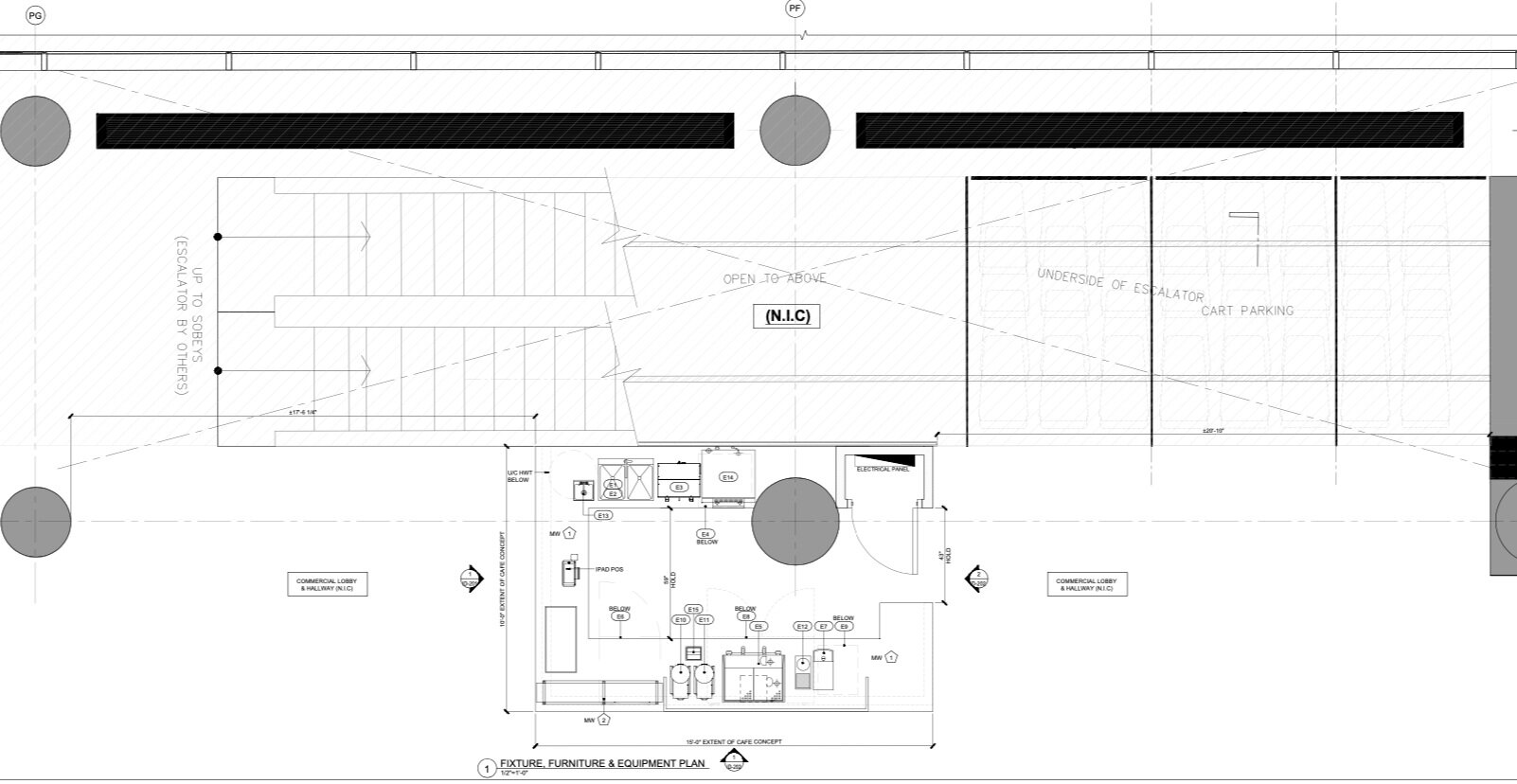
At Sansa, we prepare permit-ready documentation as part of our standard scope. That means complete construction drawings, reflected ceiling plans, millwork details, and equipment schedules that the City's Building Division can approve the first time.
The dream business you're imagining is possible. The paperwork is the part we do together.
We don’t expect you to do this alone!
At Sansa Interiors, we’ll map out your permit timeline so you can focus on running your business.