
How to Design a Café or Restaurant That Actually Has Its Own Identity (Not Just a Vibe)
Everyone opening a café has a vision. It's warm. It's inviting. It feels like a place you'd want to spend two hours. There might be exposed brick. There might be plants. There might be a really nice espresso machine visible from the entrance.
Here's the honest truth: that description fits about 400 cafés in Toronto right now.
The goal isn't a vibe. The goal is an identity — a spatial experience so specific that a guest who visits once can describe it to a friend and they'll know exactly where you mean. That's what turns a new opening into a destination. That's what gets people saving your photos before they've even been. That's what makes your second location feel like yours and not like a franchise.
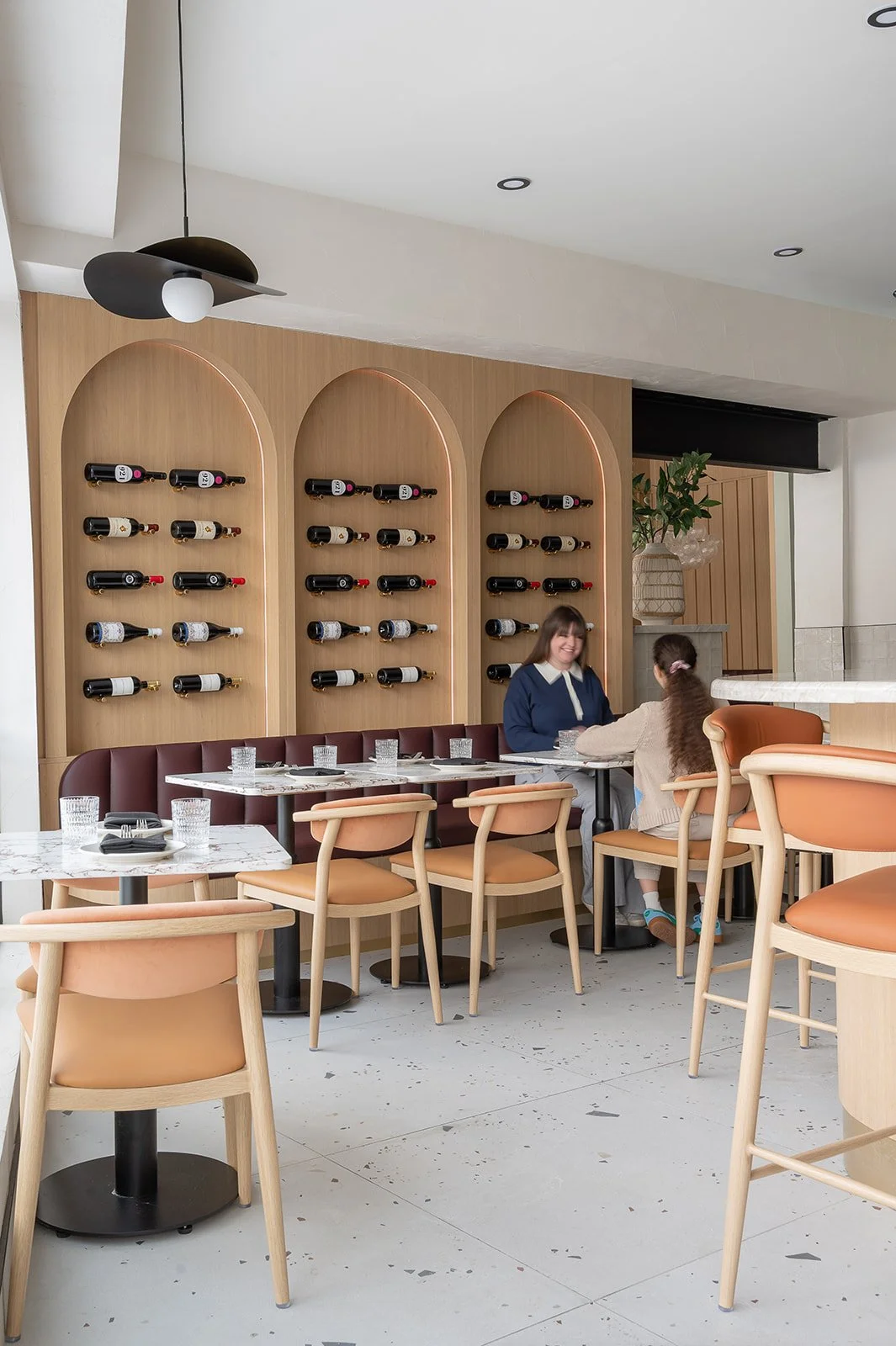
Start With the Story, Not the Aesthetic
The most common mistake first-time operators make is leading with references. They bring a designer a Pinterest board and say 'I want it to feel like this.' That's not a brief — it's a mood.
A real design brief starts with questions: Who is your guest? What does your brand believe? If your coffee programme is sourced exclusively from single-origin Ethiopian farms, that story should live in the room. If your bakery is rooted in your grandmother's Trinidadian recipes, that heritage should be somewhere you can see and feel it.
What's the one thing you want guests to say when they leave? Not 'it was nice.' Specifically. 'The light in the afternoon is unreal.' 'Every surface feels like it was chosen for a reason.' 'I didn't want to leave.'
The answers to those questions are the brief. The aesthetic follows.
The Principles Over Trends Rule
Design trends have a shelf life. The exposed brick, Edison bulb, subway tile combination that felt fresh in 2015 had already become shorthand for 'generic hospitality' by 2019. The arched doorways and terrazzo floors that dominated 2021–2023 are now showing up in airport food courts.
None of that means those elements are bad. It means that when used without intention, they read as decoration rather than story.
At Sansa, we use a simple test: Could this design decision exist only in this space, for this operator, in this neighbourhood? If the answer is yes, it belongs. If not, it needs to be interrogated.
Colour Is Not the Risk. Beige Is the Risk.
There's a fear in a lot of first-time operator briefs: the fear of committing to colour. Colour feels risky because it's specific. Beige feels safe because it's neutral.
But neutral spaces don't build memory. The room you remember — the one you've been telling friends about for two years — has colour. It has contrast. It has a moment where the eye goes 'oh' and stays.
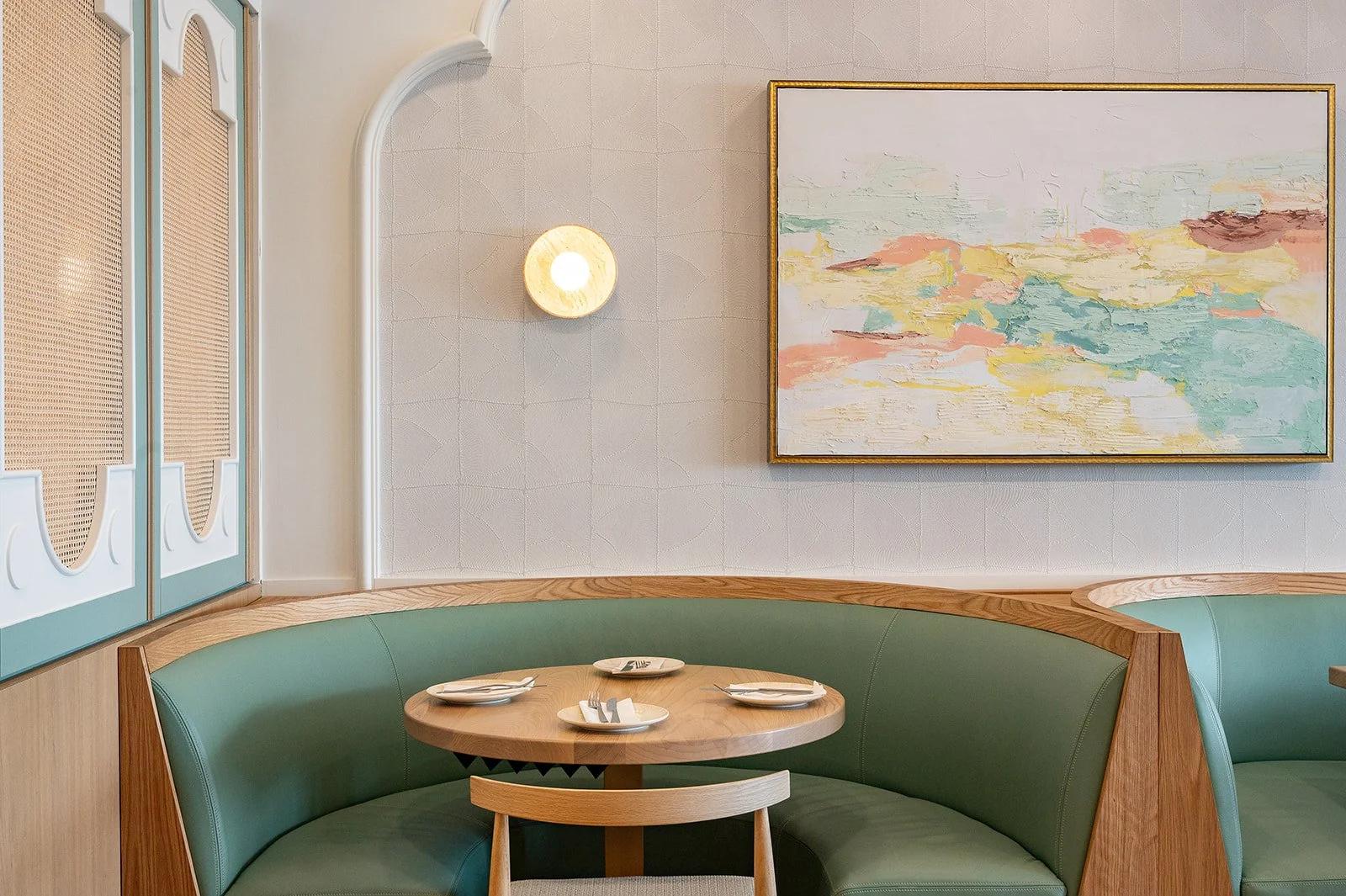
Colour doesn't mean chaotic. It means intentional. A single deep green banquette in a room of soft warm tones. A terracotta ceiling in an otherwise calm, stone-grey space. A mural that grounds the whole room. These design moves cost similar money to the safe version — but deliver a completely different return.
Let the Neighbourhood In
Toronto's neighbourhoods have personality. Parkdale is not the same as Rosedale. The Junction is not Little Portugal. Kensington Market is not Yorkville. The best hospitality spaces in this city are legible as specifically of their place.
That might mean working with a local artist for a piece that's specific to the street you're on. It might mean using a material salvaged from the building's history. It might mean referencing the culinary culture of the community you're opening inside.
This is what we call cultural and place design — one of the six holistic pillars that shapes every Sansa project. When a guest walks in and feels like this space belongs here, that's not an accident. It's a design decision.
The Hype-Worthy Room Is Not the Effortless Room
Rooms that look effortless are the most effortful to design. The spaces that generate press, word-of-mouth, and a consistent line on Tuesday mornings aren't the result of one good idea. They're the result of hundreds of small decisions made with the same intention.
That level of detail requires someone who's done it before. Not because first-time operators aren't capable of good taste — many are. But knowing why a decision works, and how it interacts with every other decision in the room, is a skill built over dozens of projects.
A unique café identity isn't a discovery you make. It's a design problem you solve.