
Important Considerations when Designing and Renovating a Coffee Shop
Opening a coffee shop takes more than a good menu. You need permits, a contractor who understands food service, and a layout that works during a morning rush. Design decisions made early affect how your business runs every day after opening.
This guide covers the permits and licenses Ontario coffee shops need. It looks at when to hire a café designer, how to choose the right contractor, and what makes a café layout work. Everything here comes from our work designing cafés across Toronto and the GTA, including Wet Coffee and Blossom Moments.

What Permits Does a Coffee Shop Need in Ontario?
Ontario coffee shops need eleven permits and licenses before opening, covering business registration, food service, health and safety, building work, and signage. The core ones are a business license, a Retail Food Service License, a Health Permit, and building permits.
Here is the full list to work through:
Business license. Required to operate a coffee shop.
Operating name license. Needed if you trade under a name other than your legal name.
Retail Food Service License. Required to sell food and drinks directly to customers.
Zoning review. May be required depending on your location.
Signage permit. Covers exterior signs. Fees typically start around $250.
Building, MEP and structural permits. Depends on the scope of your build out.
Commercial General Liability insurance. Essential for any coffee shop business.
Food Handler's Certification. Required for anyone serving food, under the Ontario Food Premises Regulation.
Health Permit. Confirms the shop meets health and safety standards. Needed before you operate.
GST or HST registration. Required if you sell items beyond coffee.
Live Entertainment License (SOCAN). Needed if you host live music.
More information about food safety laws can be reviewed here.
Do you need a café designer?
You need a café designer when the space has to work operationally, not just look good. They handle permit requirements, finish selection that survives daily use, circulation for staff and customers, and the colour and material decisions that make a space feel distinctive.
A café interior designer handles the parts that are hard to see in advance. Building permit requirements. Finish selection that survives daily use. Circulation that works for both staff behind the counter and customers in line.
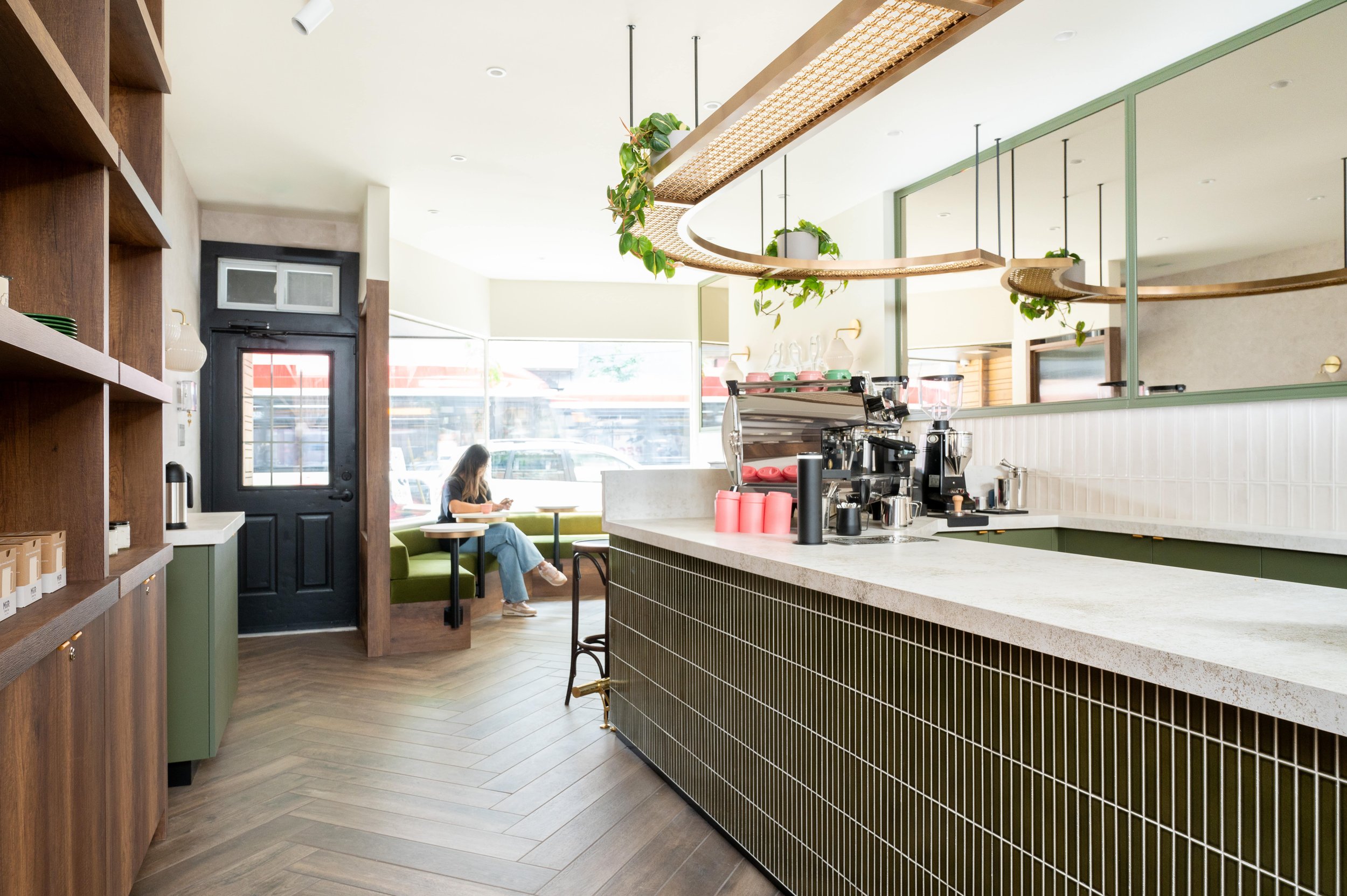
Colour is one example. Many people picture cream and white. A designer works with a much wider palette to make a space feel warm and distinctive. You can see this in our work on Blossom Moments Café. Doing café interior design without a professional is possible. Doing it well is harder than it looks, particularly around permits and flow.
How Do You Choose a Contractor for a Coffee Shop Renovation?
Choose a contractor who has built cafés and restaurants before, because food service build outs carry requirements that office and warehouse contractors rarely handle. Picking the wrong one leads to failed inspections, delays, and costs that surface partway through the build.Failed inspections cause delays and added costs. Many new coffee shop owners pick a general contractor without food service experience and discover the gap partway through the build.
The comparison is simple. A dermatologist holds a medical degree. You would still not book your annual heart check with one. Specialisation matters.

What Makes a Good Café Layout?
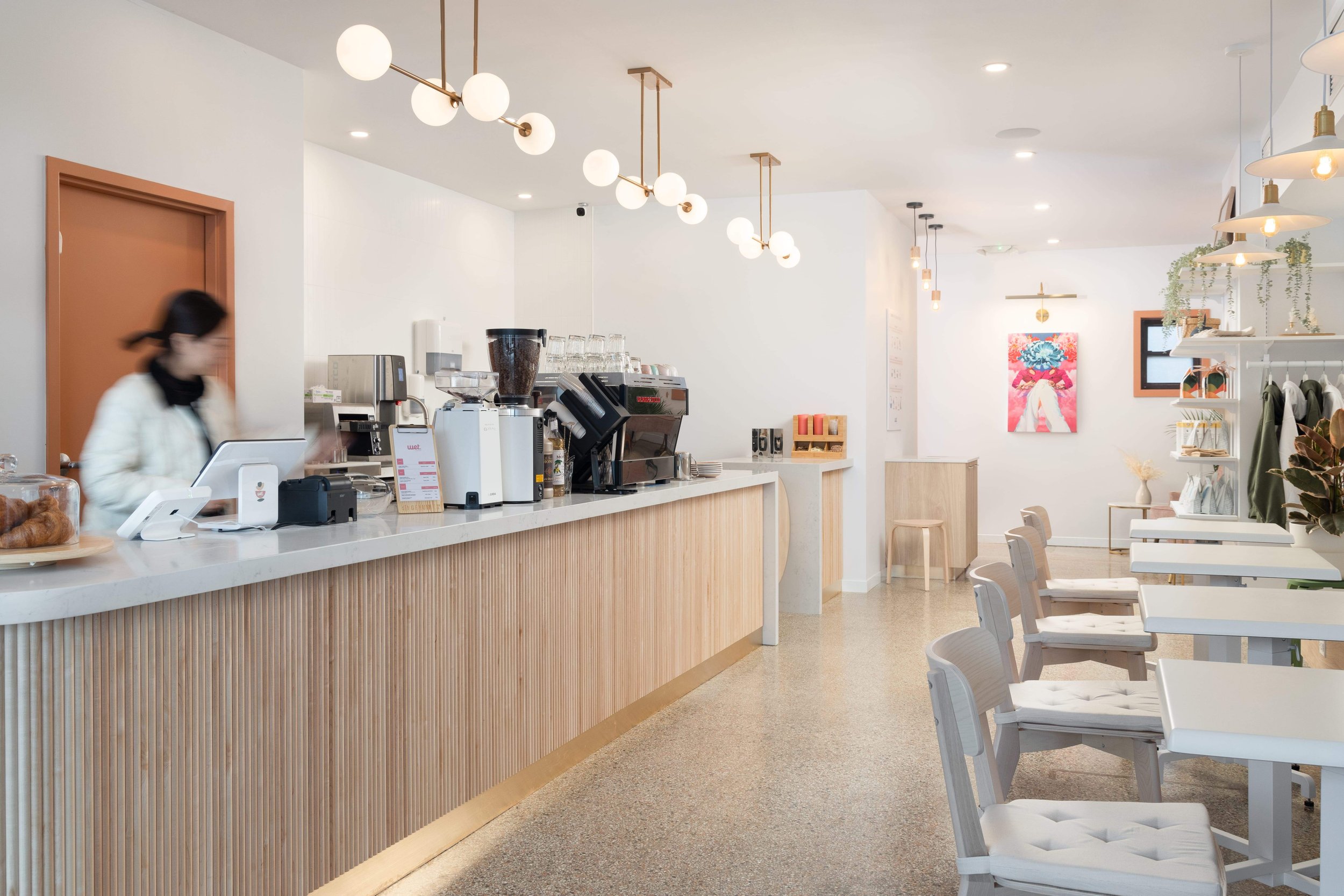
A good café layout keeps customers moving comfortably during peak hours through clear sightlines to the menu, accessible seating, and a counter position that avoids bottlenecks. Lighting, furniture, and finishes all affect how the space works alongside the floor plan.
Clear signage, easy to reach seating, and well placed menu boards reduce wait times. Customers notice when ordering feels simple.
Layout, lighting, furniture, and finishes all shape how the space feels. Coffee shop interior designers can help you plan a layout that fits your brand and works during a rush.
Designing Photogenic Spaces with Natural Elements
Natural materials, planting, and daylight make a café feel calmer and more open, and they photograph well when customers share images of your space. Bamboo, wood, earthy palettes, and living walls are the most common ways to achieve it.
Biophilic café design uses lush planting and earthy colour palettes. Bamboo and wood improve the atmosphere and signal a commitment to sustainable materials.
Natural light and greenery create a sense of openness. Hanging plants, organic shapes, and living walls all contribute to a space people want to photograph.

How do you get landlord approval for a café?
Landlords approve tenants who look prepared, which means a solid business plan, evidence of financial stability, and relevant experience. Timelines matter as much as approval, since renovation schedules need to align with your lease terms and opening target. Building a good relationship with the landlord speeds the process. Flexibility during negotiation helps too.
Timelines matter as much as approval. Renovation schedules need to align with your lease terms and your opening target. Plan your start date carefully and get legal advice on the lease where you need it.
Article by Jude Kamal, Founder & Registered Interior Designer of Sansa Interiors.
Looking for a Café Interior Designer in Toronto?
Opening a café involves more than great coffee. It requires thoughtful planning, strategic design, and expert execution from permits and planning to layout and finishing touches. At Sansa Interiors, our team designs cafés that are both visually compelling and highly functional. Let’s create a space that works for your business from day one.